

Wool has long been a preferred fiber when we’re sourcing rugs, textiles, and throw blankets for our interior design projects. Its inherent longevity, beauty, durability, endless design possibilities, natural stain resistance, and cleanability make it a highly desirable material.
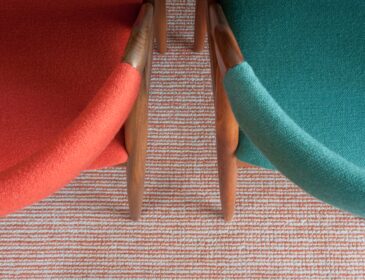
So when planning a trip to New Zealand, I was excited to see the source of this wonder fiber, and to learn more about production. I found an intimate Airbnb Experience at a small family farm, and it was a total crowd pleaser.
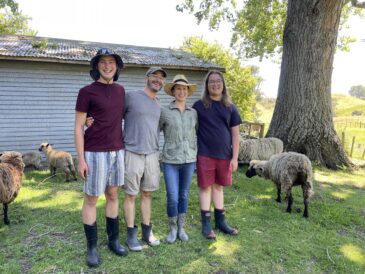
When we arrived at Angie’s Sheep Farm in Waikite, the first order of business was to get fitted for rubber boots. With proper foot attire and sheep food in hand, we made fast friends with a few members of the herd, while Angie shared with us about life on the farm that she and her husband operate.
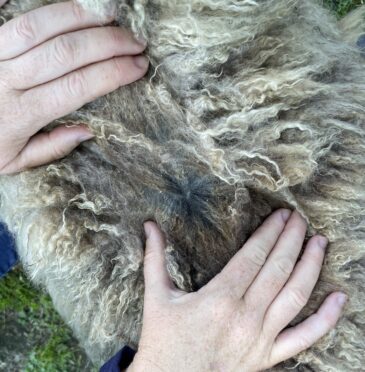
Above, Angie gave us a close-up look at a sheep’s coat. It’s sort of miraculous to me that this much wool grows in a single season! The glands in sheepskin produce their own water repellent substance, known as lanolin. This natural protection from the elements is also why wool products are inherently resistant to staining.
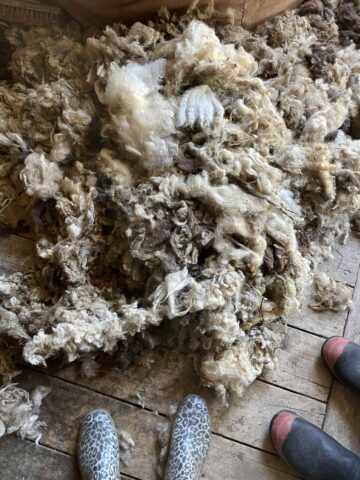
Angie brought us to the sheering shed, where she explained the sheering process and the strength and skill that is required to sheer a sheep. Above is what un-processed wool looks like immediately after the sheep are shorn.
From here, the wool gets sorted. Angie keeps some for her own use, she trades wool with other local farmers, and she sells the rest, primarily to crafters and makers.
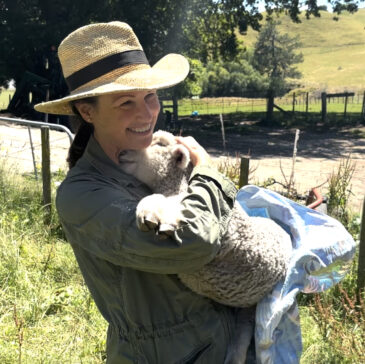
After a detour to cuddle with Cookie, an off-season surprise baby sheep that gets bottle-fed while the mama grazes with the herd, we made our way to Angie’s porch, where we got a crash course in how to comb & spin wool.
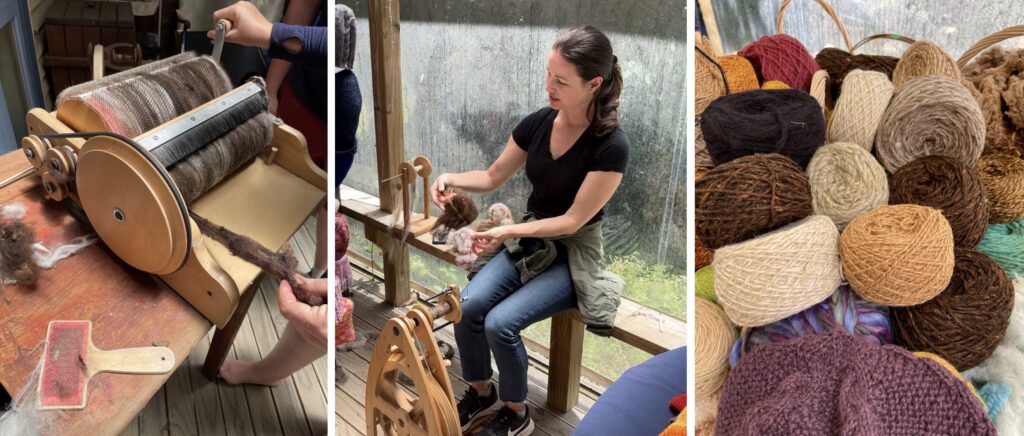
At the end of our tour, we each got to select a hat, knitted by Angie, and she was able to identify from which of her sheep the wool for each of our hats came.
I came away with a deeper appreciation of the labor and love that goes into the production of wool, the fragility of this resource, and the purity of the material that makes possible such beautiful and long-lasting products.
There is an enormous temptation to buy the equivalent of ‘fast fashion’ when it comes to home décor. To narrow the conversation, I’ll focus on area rugs, where there are endless sources for inexpensive rugs made of synthetic fibers. I feel the temptation, too! The rug can be delivered tomorrow?! I can ‘save’ how much money?! But what is the true, hidden cost of these decisions?
Human Health
Wool rugs are sort of like the equivalent of eating whole foods because you know exactly what is in them: grass, sunshine, water, and fresh air. Clearly we don’t eat rugs, but the micro-particles and emissions from synthetic products are known to get into our bodies and to adversely affect indoor air quality.
Planetary Health
The same micro-particles and emissions eventually make their way into our water sources and soil, where they accumulate over time to detrimental impact on the earth. This in turn impacts human health. When a wool rug has completed its duration in one setting, it can often find life in a new setting. If not, un-backed wool rugs can be re-purposed as insulation or otherwise. In a worst-case scenario, wool is biodegradable.
Long-Term Monetary Cost
That fast fashion, synthetic rug may seem like a great deal today, but a hasty purchase now often leads to a re-do later. The lanolin in wool endows it with natural stain resistance. With regular maintenance and occasional professional cleaning, wool rugs will endure with beauty and luster for decades and often generations. Instead of spending time and money on a new rug every few years (and burdening the planet with the old rug), those resources could be directed elsewhere, helping to slow the cycle of consumption.
Still with me? Sorry to be a downer about fast fashion in home decor. No judgement, we are all inundated with these messages! But here’s some good news…
Through the Campaign for Wool and the Wool In Schools program, New Zealand is committed to supporting and promoting sheep farmers, sustainable farming practices, and wool production. With the support of King Charles, the program focuses on education programs that help youth and young adults learn about the wool industry and participate in innovation around wool production and application.
To learn more about this program and the attributes of the wonder fiber that is wool, follow this link to read more about the Campaign for Wool NZ.
If you would like to talk to Ellen Nystrom about an interior design project, click the link below to submit an inquiry form and schedule a Discovery Call:

share it
email it